Friday, November 10, 2006

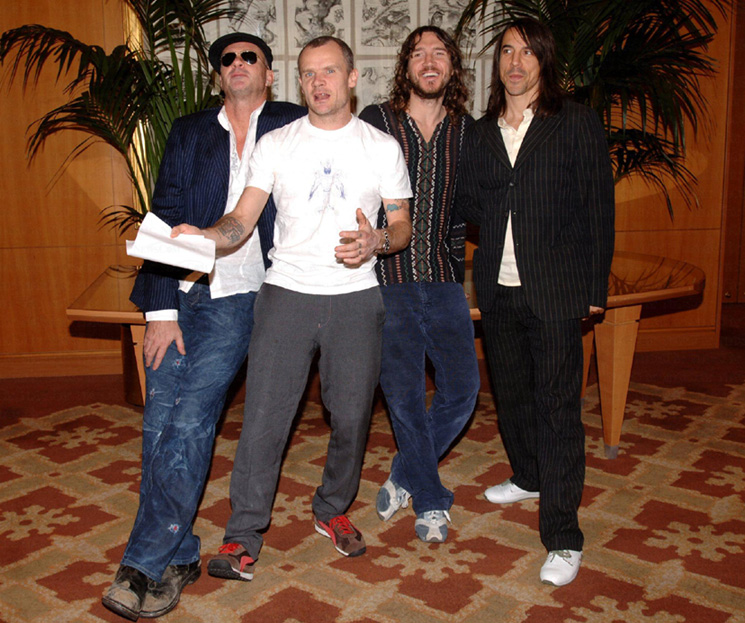
Chili Peppers Secret Show

i didn't win :-(
but LAist says that some tix are available to the public if you've got time to stand on line tonight:
Tickets are free to the public and EXTREMELY LIMITED.

Tickets can only* be picked up tonight at the Circuit City at 4400 Sunset Blvd in East Hollywood starting at 7pm on a first-come-first-serve basis. Tickets come in pairs.

Thursday, November 09, 2006

Chili Peppers to do Secret LA Show


from the LAist! the show is tied to micosoft's new zune music player. woo hoo! i signed up with only minutes to spare before the deadline. fingers crossed.

Wednesday, November 08, 2006

Rumsfeld Out

can the news get any better today?
wahooey!
here's an excerpt from a CNN story:
In brief remarks, Rumsfeld described the Iraq conflict as a "little understood, unfamiliar war" that is "complex for people to comprehend."


that's what made him arrogant and obnoxious. he thinks we're all just a bunch of dumb dumbs.

Tuesday, November 07, 2006

Deep Beneath the Cover

of Another Perfect Wonder,
ah, thanks flo. here's the chili's new video Snow: http://www.stadium-arcadium.com/main/video/snow.htm.
it's a low key video, black and white shots and concert footage. love this song.

Snow lyrics:
Snow (hey Oh) by Red Hot Chili Peppers
Come to decide that the things that I tried were in my life just to get high on.
When I sit alone, come get a little known but I need more than myself this time.
Step from the road to the sea to the sky, and I do believe what we rely on
when I lay it on, come get to play it on all my life to sacrifice.
Hey oh...listen what I say oh I got your hey oh, now listen what I say oh
When will I know that I really can't go to the well once more time to decide on.
When it's killing me, when will I really see, all that I need to look inside.
Come to believe that I better not leave before I get my chance to ride,
when it's killing me, what do I really need all that I need to look inside.
Hey oh...listen what I say oh come back and hey oh, look at what I say oh
The more I see the less I know
The more I like to let it go - hey oh, woah...
Deep beneath the cover of another perfect wonder where it's so white as snow,
Privately divided by a world so undecided and there's nowhere to go;
In between the cover of another perfect wonder where it's so white as snow,
running through a field where all my tracks will be concealed and there's nowhere to go. Ho!Went to descend to amend for a friend All the channels that have broken down.
Now you bring it up,I'm gonna ring it up, Just to hear you sing it out.
Step from the road to the sea to the sky, and I do belive what we rely on,
when I lay it on, come get to play it on all my life to sacrifice
Hey oh...Listen what I say oh I got your hey oh...listen what I say oh
The more I see, the less I know The more I like to let it go - hey oh woah...
Deep beneath the cover of another perfect wonder where it's so white as snow.
Privately divided by a world so undecided and there's nowhere to go
In between the cover of another perfect wonder where it's so white as snow
Running through the field where all my tracks will be concealed and there's nowhere to go.
I said hey hey yeah oh yeah, tell my love now. Hey Hey yeah oh yeah, tell my love now.Deep Beneath the cover of another perfect wonder where it's so white as snow, Privately divided by a world so undecided and there's nowhere to go. Deep Beneath the cover of another perfect wonder where it's so white as snow...Running through the field where all my tracks will be concealed and there's nowhere to go.I said hey oh yeah oh yeah..tell my love now Hey yeah yeah...oh yeah

My First Blog

today, i celebrate my two-year anniversary blogging. below is an essay i wrote and posted to my first blogsite (hosted somewhere else at the time). my great disappointment that prez. bush won the election was the reason i started blogging.

here we are again, election time. i didn't want to vote but did anyway because i could mail it in. when you have politicians insulting your intelligence with ads such as "i was fat." that's from mr. bustamante, running for office here in cali. he tries to say that because he lost weight he can do the same for california, or something absurd like that. who are these ads targeting?

here's my prediction: despite the media yammering on about people wanting change, it will still be a republican congress once the votes are tallied. who doesn't want to see change? but for me, i can't tell the difference between a republican or a democrat. one is as good as the other. they're all the same. the democrats, sadly, haven't done anything to stand out. the only politician i've seen that's remotely intriguing is barak obama.

anyway, this is the one of the only times i'll ever blog about politics. after my first post in november 2004, i decided i didn't want to write about politics. i felt like i needed a year-long shower. besides, there are so many bloggers that write about politics, either left or right, and their discussions are so full of venom.

really, i don't consider myself either D or R and i think that we've been pushed to take sides, thanks in large part to our current leadership. these days, i don't think the country is as divided -- red and blue -- as we are made to believe. i think we just have a leader who is a divider not a uniter.

i still think that picking a fight in iraq was a monstrous mistake in every regard, so big that we'll not feel the full effects. future generations of the world will. here's another thing, i don't think that anyone truly believed there were WMDs in Iraq. i know everyone says they did. i think americans, still smarting over the terrorist attacks, just wanted to believe and wanted revenge, even if it was the wrong target.

americans rationalized that Iraq was A target. sadaam was a bad guy, so why not? everything got mixed up. are we fighting osama or sadaam? are they brothers? and then the prez put the fear of god in the people, who were already scared. and the people fell for it. i don't blame the prez anymore because i think he's trying his best. i don't think he's evil. he's merely a reflection of the american people.

speaking of evil reflections, what a nice coincidence ;-)that ted haggard, the leader of the evangelicals that were so influential in 2004, has been found to be a hypocrite. i remember when he condemned homosexuals and non-christians to hell on a barbara walters special. why would anyone follow a man who believed that? why would anyone follow a man?

poor guy. he's just a gay man who has tortured himself his whole life for being gay. if the planet is still around in 40 years, homosexuality will be a non issue. the funny thing is, if mr. ted had been true to who he is, he'd be a more christian human being. i don't think his outing was a coincidence. but there i go mixing religion and politics.

My First Blog, Nov. 2004:


Why am I so angry with my mother for voting for George Bush?
Why am I so disheartened that 59 million of my fellow Americans voted for
Bush?

Why am I so depressed?

One of my friends sent me a consoling email: "The depression is deep and widespread," she said. Someone else I know is making black armbands.

I am not alone. I know that. But still, I’m miserable.

I honestly thought that Sen. John Kerry was going to win in a landslide. I ended all of my emails "Kerry in a landslide!" I know, many of you are laughing, thinking of me as a poor naïve liberal Democrat. (I did vote for Arnold Schwarzenegger and I’m registered as Independent).

I thought the people were going to rise up. I had such hope and faith that a new era of enlightenment was here. I imagined the look on Bush’s face when he found he was out. I pictured him having a tantrum.

I imagined the red-faced, contorted look on right wing talk show host, Rush Limbaugh, the one who my mother listens to.

I knew Kerry was a good man. I was convinced after I watched him on C-SPAN as a younger Kerry speaking out against the Vietnam War. He spoke eloquently, was enlightened and way ahead of his time. Still is.

I knew he was peace-minded. Then came the debates. I could see he wanted to make a difference. I knew he was smart.

I didn’t vote for him to vote against Bush. I thought he was the cat’s pajamas. To me, he was hope.

Today, I’m wondering how Kerry would be handling Iraq and would the Red team feel so awful with Bush out of office? Would the stock market have plunged if Kerry was elected?

I got Kerry.

I didn’t get Bush. I don’t get Bush.
I didn’t understand what he was saying. Does "freedom is on the march" actually mean "Christianity is on the march?" Do people think that God speaks to Bush?

Perhaps the biggest mystery of all: Bush won on "moral values?" I’m truly dumbfounded.

Does that mean the rest of us have no "moral values?" I have plenty.

I believe that you should help the poorest long before you help the richest. I believe we should take care of the environment even though we may not live long enough to see the results. I don’t think there’s anything wrong with two people of the same sex being in love or having a life together.

But this leads me to wonder: Are these the people that go to church, the ones that have "moral values?" Is that what they teach in church?

I don’t go to church. I don’t believe that "church" is a place. I believe everyone should be able to worship the way they choose. I believe if people are more aligned with their own faith, rather than trying to convert others, the results will be better for all.

Aren’t we all under the same umbrella?
But I guess those are different values.

I feel disconnected. But it has spurred me to try and "get it" or be lost in despair, worse yet, give in to the awful oppression that I feel.

I want to understand the Red team and what makes them tick. So if you see me at your church taking notes, be kind. Feel free to explain to me why war is okay but abortion is not. (For the record, I’m not for abortion but I am for a practical approach that would help solve the problem). Why tax breaks to the rich is okay, but breaks for the poor is not? Why forcing "democracy" and "freedom" on other countries is okay but racism, which squashes freedom and democracy, persists in the U.S.

It’s not likely that I’ll cross over to the other side to be a Bush supporter. But at least I’ll understand.

A note to the Democratic Party: I’m not interested in a candidate that would appeal to the Red team.

I’m on the Blue team now and although some people I love dearly aren’t on my team, 56 million people are, and for that I’m hopeful.

Monday, November 06, 2006

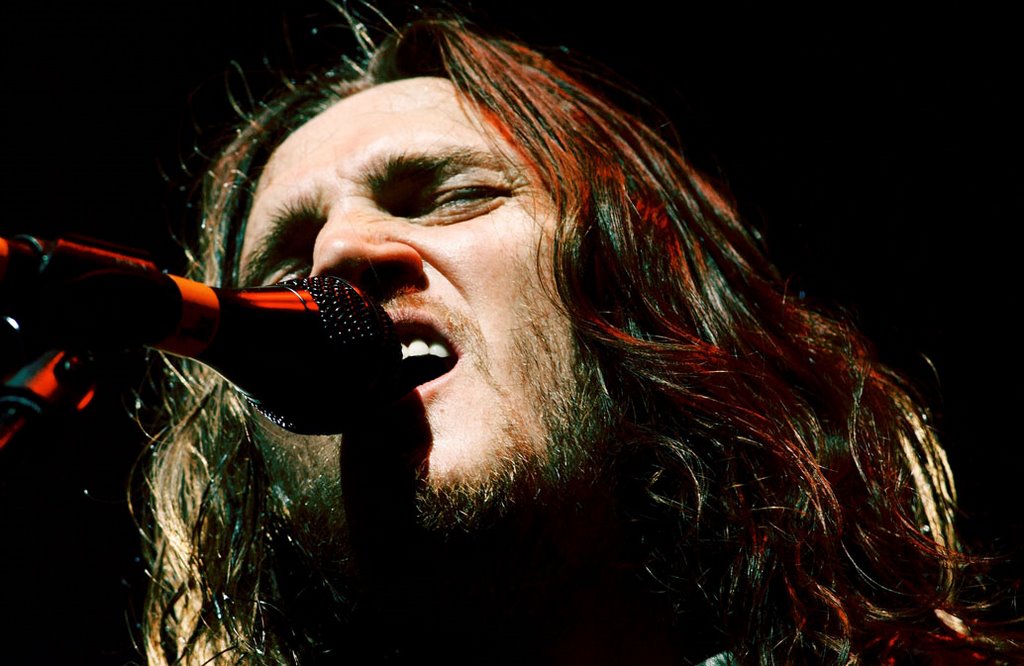
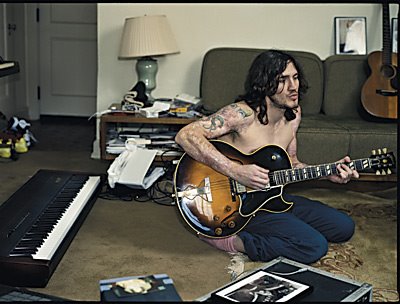
Vote John Frusciante Best Guitarist

do it here
i love this song! "city of new orleans" by John. the original, part of my 45 collection, is by arlo guthrie. John messes up but then the audience spurs him to go on. that's what makes his solos the bestest parts of the chilis shows. they are often songs he just learned. he's also doing fleetwood mac's songbird. i'd like to see him do a gordon lightfoot song or the carpenters.

Wednesday, November 01, 2006

National Novel Writing Month


i didn't know. now i do. november is national novel writing month, where people of all abilities write a book in 30 days. it doesn't matter if it's bad, only that you write 50,000 words (175 pages). dare i? what fun.
today is day one.
i've lost one day.
but i'm in.
here's the blog

Sylvia Plath Ennui

Sylvia's recently discovered poem at Blackbird. it was inspired by The Great Gatsby.
read how it was found
here's an original typewritten draft

Tuesday, October 31, 2006

Grim Reaper


i saw the grim reaper today on the street corner nearby diedrich coffee shop and i thought i was done for... til i remembered, it's halloween.

Thursday, October 26, 2006

Fence Me In

the Prez approves a 700-mile fence to keep people out. democrats and republicans alike agreed -- what a great idea.

i can't think of anything more foolish, inane, absurd. this is how i know it's a childish idea -- the minutemen, or minute men, as in very small men, have been foaming for a fence and they are pretty much foolish folks. they say they're afraid of immigrants but i think they're bored with themselves. here's their web site if you want to see for yourself.

Ataxia 2 Coming Soon

update: Ataxia follow up CD out March 20! See latest post

rumblings that john frusciante, joe lally and josh klinghoffer's (together as Ataxia) Automatic Writing followup will be out in december, january or february. at least it's coming!

this from frusciante.net, a fan site:
The official German John Frusciante website has now revealed the release date for the second release from the Ataxia session in February 2004. It will be released in Germany on the 1st December 2006.
There are no further information given concerning a possible record title or a cover.

But we can already name the tracklist of an unmastered version:

1. Ethiopian Song
2. The Empty's Response
3. Attention
4. OLA
5. The Soldier

Monday, October 23, 2006

The God Delusion

and now for the backlash... it had to happen. balance to all the religious zealots, the evangelism, the mingling of politics and religion. now, there's a you-fool-there-is-no-god-only-science movement. why can't there be a happy middle?

Wired has a story in this month's mag.
also, below from the NYT, a book review of the God Delusion.
October 22, 2006
Beyond Belief
By JIM HOLT
Skip to next paragraph
THE GOD DELUSION
By Richard Dawkins.

406 pp. Houghton Mifflin Company. $27.
Richard Dawkins, who holds the interesting title of “Charles Simonyi professor of the public understanding of science” at Oxford University, is a master of scientific exposition and synthesis. When it comes to his own specialty, evolutionary biology, there is none better. But the purpose of this book, his latest of many, is not to explain science. It is rather, as he tells us, “to raise consciousness,” which is quite another thing.

The nub of Dawkins’s consciousness-raising message is that to be an atheist is a “brave and splendid” aspiration. Belief in God is not only a delusion, he argues, but a “pernicious” one. On a scale of 1 to 7, where 1 is certitude that God exists and 7 is certitude that God does not exist, Dawkins rates himself a 6: “I cannot know for certain but I think God is very improbable, and I live my life on the assumption that he is not there.”

Dawkins’s case against religion follows an outline that goes back to Bertrand Russell’s classic 1927 essay “Why I Am Not a Christian.” First, discredit the traditional reasons for supposing that God exists. (“God” is here taken to denote the Judeo-Christian deity, presumed to be eternal, all-powerful, all-good and the creator of the world.) Second, produce an argument or two supporting the contrary hypothesis, that God does not exist. Third, cast doubt on the transcendent origins of religion by showing that it has a purely natural explanation. Finally, show that we can have happy and meaningful lives without worshiping a deity, and that religion, far from being a necessary prop for morality, actually produces more evil than good. The first three steps are meant to undermine the truth of religion; the last goes to its pragmatic value.

What Dawkins brings to this approach is a couple of fresh arguments — no mean achievement, considering how thoroughly these issues have been debated over the centuries — and a great deal of passion. The book fairly crackles with brio. Yet reading it can feel a little like watching a Michael Moore movie. There is lots of good, hard-hitting stuff about the imbecilities of religious fanatics and frauds of all stripes, but the tone is smug and the logic occasionally sloppy. Dawkins fans accustomed to his elegant prose might be surprised to come across such vulgarisms as “sucking up to God” and “Nur Nurny Nur Nur” (here the author, in a dubious polemical ploy, is imagining his theological adversary as a snotty playground brat). It’s all in good fun when Dawkins mocks a buffoon like Pat Robertson and fundamentalist pastors like the one who created “Hell Houses” to frighten sin-prone children at Halloween. But it is less edifying when he questions the sincerity of serious thinkers who disagree with him, like the late Stephen Jay Gould, or insinuates that recipients of the million-dollar-plus Templeton Prize, awarded for work reconciling science and spirituality, are intellectually dishonest (and presumably venal to boot). In a particularly low blow, he accuses Richard Swinburne, a philosopher of religion and science at Oxford, of attempting to “justify the Holocaust,” when Swinburne was struggling to square such monumental evils with the existence of a loving God. Perhaps all is fair in consciousness-raising. But Dawkins’s avowed hostility can make for scattershot reasoning as well as for rhetorical excess. Moreover, in training his Darwinian guns on religion, he risks destroying a larger target than he intends.

The least satisfying part of this book is Dawkins’s treatment of the traditional arguments for the existence of God. The “ontological argument” says that God must exist by his very nature, since he possesses all perfections, and it is more perfect to exist than not to exist. The “cosmological argument” says that the world must have an ultimate cause, and this cause could only be an eternal, God-like entity. The “design argument” appeals to special features of the universe (such as its suitability for the emergence of intelligent life), submitting that such features make it more probable than not that the universe had a purposive cosmic designer.

These, in a nutshell, are the Big Three arguments. To Dawkins, they are simply ridiculous. He dismisses the ontological argument as “infantile” and “dialectical prestidigitation” without quite identifying the defect in its logic, and he is baffled that a philosopher like Russell — “no fool” — could take it seriously. He seems unaware that this argument, though medieval in origin, comes in sophisticated modern versions that are not at all easy to refute. Shirking the intellectual hard work, Dawkins prefers to move on to parodic “proofs” that he has found on the Internet, like the “Argument From Emotional Blackmail: God loves you. How could you be so heartless as not to believe in him? Therefore God exists.” (For those who want to understand the weaknesses in the standard arguments for God’s existence, the best source I know remains the atheist philosopher J. L. Mackie’s 1982 book “The Miracle of Theism.”)

It is doubtful that many people come to believe in God because of logical arguments, as opposed to their upbringing or having “heard a call.” But such arguments, even when they fail to be conclusive, can at least give religious belief an aura of reasonableness, especially when combined with certain scientific findings. We now know that our universe burst into being some 13 billion years ago (the theory of the Big Bang, as it happens, was worked out by a Belgian priest), and that its initial conditions seem to have been “fine tuned” so that life would eventually arise. If you are not religiously inclined, you might take these as brute facts and be done with the matter. But if you think that there must be some ultimate explanation for the improbable leaping-into-existence of the harmonious, biofriendly cosmos we find ourselves in, then the God hypothesis is at least rational to adhere to, isn’t it?

No, it’s not, says Dawkins, whereupon he brings out what he views as “the central argument of my book.” At heart, this argument is an elaboration of the child’s question “But Mommy, who made God?” To posit God as the ground of all being is a nonstarter, Dawkins submits, for “any God capable of designing a universe, carefully and foresightfully tuned to lead to our evolution, must be a supremely complex and improbable entity who needs an even bigger explanation than the one he is supposed to provide.” Thus the God hypothesis is “very close to being ruled out by the laws of probability.”

Dawkins relies here on two premises: first, that a creator is bound to be more complex, and hence improbable, than his creation (you never, for instance, see a horseshoe making a blacksmith); and second, that to explain the improbable in terms of the more improbable is no explanation at all. Neither of these is among the “laws of probability,” as he suggests. The first is hotly disputed by theologians, who insist, in a rather woolly metaphysical way, that God is the essence of simplicity. He is, after all, infinite in every respect, and therefore much easier to define than a finite thing. Dawkins, however, points out that God can’t be all that simple if he is capable of, among other feats, simultaneously monitoring the thoughts of all his creatures and answering their prayers. (“Such bandwidth!” the author exclaims.)

If God is indeed more complex and improbable than his creation, does that rule him out as a valid explanation for the universe? The beauty of Darwinian evolution, as Dawkins never tires of observing, is that it shows how the simple can give rise to the complex. But not all scientific explanation follows this model. In physics, for example, the law of entropy implies that, for the universe as a whole, order always gives way to disorder; thus, if you want to explain the present state of the universe in terms of the past, you are pretty much stuck with explaining the probable (messy) in terms of the improbable (neat). It is far from clear which explanatory model makes sense for the deepest question, the one that, Dawkins complains, his theologian friends keep harping on: why does the universe exist at all? Darwinian processes can take you from simple to complex, but they can’t take you from Nothing to Something. If there is an ultimate explanation for our contingent and perishable world, it would seemingly have to appeal to something that is both necessary and imperishable, which one might label “God.” Of course, it can’t be known for sure that there is such an explanation. Perhaps, as Russell thought, “the universe is just there, and that’s all.”

This sort of coolly speculative thinking could not be more remote from the rococo rituals of religion as it is actually practiced across the world. Why is it that all human cultures have religion if, as Dawkins believes he has proved, it rests on a delusion? Many thinkers — Marx, Freud, Durkheim — have produced natural histories of religion, arguing that it arose to serve some social or psychological function, such as, in Freud’s account, the fulfillment of repressed wishes toward a father-figure.

Dawkins’s own attempt at a natural history is Darwinian, but not in the way you might expect. He is skeptical that religion has any survival value, contending that its cost in blood and guilt outweighs any conceivable benefits. Instead, he attributes religion to a “misfiring” of something else that is adaptively useful; namely, a child’s evolved tendency to believe its parents. Religious ideas, he thinks, are viruslike “memes” that multiply by infecting the gullible brains of children. (Dawkins coined the term “meme” three decades ago to refer to bits of culture that, he holds, reproduce and compete the way genes do.) Each religion, as he sees it, is a complex of mutually compatible memes that has managed to survive a process of natural selection. (“Perhaps,” he writes in his usual provocative vein, “Islam is analogous to a carnivorous gene complex, Buddhism to a herbivorous one.”) Religious beliefs, on this view, benefit neither us nor our genes; they benefit themselves.

Dawkins’s gullible-child proposal is, as he concedes, just one of many Darwinian hypotheses that have been speculatively put forward to account for religion. (Another is that religion is a byproduct of our genetically programmed tendency to fall in love.) Perhaps one of these hypotheses is true. If so, what would that say about the truth of religious beliefs themselves? The story Dawkins tells about religion might also be told about science or ethics. All ideas can be viewed as memes that replicate by jumping from brain to brain. Some of these ideas, Dawkins observes, spread because they are good for us, in the sense that they raise the likelihood of our genes getting into the next generation; others — like, he claims, religion — spread because normally useful parts of our minds “misfire.” Ethical values, he suggests, fall into the first category. Altruism, for example, benefits our selfish genes when it is lavished on close kin who share copies of those genes, or on non-kin who are in a position to return the favor. But what about pure “Good Samaritan” acts of kindness? These, Dawkins says, could be “misfirings,” although, he hastens to add, misfirings of a “blessed, precious” sort, unlike the nasty religious ones.

But the objectivity of ethics is undermined by Dawkins’s logic just as surely as religion is. The evolutionary biologist E. O. Wilson, in a 1985 paper written with the philosopher Michael Ruse, put the point starkly: ethics “is an illusion fobbed off on us by our genes to get us to cooperate,” and “the way our biology enforces its ends is by making us think that there is an objective higher code to which we are all subject.” In reducing ideas to “memes” that propagate by various kinds of “misfiring,” Dawkins is, willy-nilly, courting what some have called Darwinian nihilism.

He is also hasty in dismissing the practical benefits of religion. Surveys have shown that religious people live longer (probably because they have healthier lifestyles) and feel happier (perhaps owing to the social support they get from church). Judging from birthrate patterns in the United States and Europe, they also seem to be outbreeding secular types, a definite Darwinian advantage. On the other hand, Dawkins is probably right when he says that believers are no better than atheists when it comes to behaving ethically. One classic study showed that “Jesus people” were just as likely to cheat on tests as atheists and no more likely to do altruistic volunteer work. Oddly, Dawkins does not bother to cite such empirical evidence; instead, he relies, rather unscientifically, on his intuition. “I’m inclined to suspect,” he writes, “that there are very few atheists in prison.” (Even fewer Unitarians, I’d wager.) It is, however, instructive when he observes that the biblical Yahweh is an “appalling role model,” sanctioning gang-rape and genocide. Dawkins also deals at length with the objection, which he is evidently tired of hearing, that the arch evildoers of the last century, Hitler and Stalin, were both atheists. Hitler, he observes, “never formally renounced his Catholism”; and in the case of Stalin, a onetime Orthodox seminarian, “there is no evidence that his atheism motivated his brutality.” The equally murderous Mao goes unmentioned, but perhaps it could be argued that he was a religion unto himself.

Despite the many flashes of brilliance in this book, Dawkins’s failure to appreciate just how hard philosophical questions about religion can be makes reading it an intellectually frustrating experience. As long as there are no decisive arguments for or against the existence of God, a certain number of smart people will go on believing in him, just as smart people reflexively believe in other things for which they have no knock-down philosophical arguments, like free will, or objective values, or the existence of other minds. Dawkins asserts that “the presence or absence of a creative super-intelligence is unequivocally a scientific question.” But what possible evidence could verify or falsify the God hypothesis? The doctrine that we are presided over by a loving deity has become so rounded and elastic that no earthly evil or natural disaster, it seems, can come into collision with it. Nor is it obvious what sort of event might unsettle an atheist’s conviction to the contrary. Russell, when asked about this by a Look magazine interviewer in 1953, said he might be convinced there was a God “if I heard a voice from the sky predicting all that was going to happen to me during the next 24 hours.” Short of such a miraculous occurrence, the only thing that might resolve the matter is an experience beyond the grave — what theologians used to call, rather pompously, “eschatological verification.” If the after-death options are either a beatific vision (God) or oblivion (no God), then it is poignant to think that believers will never discover that they are wrong, whereas Dawkins and fellow atheists will never discover that they are right.

As for those in between — ranging from agnostics to “spiritual” types for whom religion is not so much a metaphysical proposition as it is a way of life, illustrated by stories and enhanced by rituals — they might take consolation in the wise words of the Rev. Andrew Mackerel, the hero of Peter De Vries’s 1958 comic novel “The Mackerel Plaza”: “It is the final proof of God’s omnipotence that he need not exist in order to save us.”

Jim Holt, a regular contributor to The New Yorker and The New York Times Magazine, is working on a book about the puzzle of existence.

Friday, October 20, 2006

John Frusciante Ascending


Is this fab or what? a very crafty friend made this for me and needless to say, I was very happy. she's a major RHCP fan and getting into John's music. here's a link to a cool Red Hot Chili Peppers canvas she made. she could make a fortune selling these, if you ask me.
Thanks again Flo!

Thursday, October 19, 2006

Sphere in the Heart of Silence

i had heard about this performance at an LA club and here 'tis. this is John Frusciante doing Walls off the Sphere CD, the disco album as I like to call it. Sphere is all dance all the time

Thursday, October 05, 2006

It's a John Frusciante Day!


because it is.
rarely can music be inhaled but i assure you, if you inhale John Frusciante's music it will make you sparkly. that's right. so if you're feeling low, there's a Johnny song. if you're feeling happy, there's a Johnny song. might i add, that stadium arcadium (john is the guitar player for the red hot chili peppers and a solo artist with about 10 glorious albums out there) is one to be inhaled. ah, try it, you'll see.

Wednesday, September 27, 2006

National Ask For A Raise Day

on a recent oprah show, a handsome wealthy family turns over the keys to a house that they bought for a poor family, victims of Katrina. the givers were so pleased with themselves that they said they were going to do it again, buy another house for another poor, poor family. it occured to me then that there's a lot of that going on lately. sure was nice of them. but it's kind of frightening.

poor people, even middle class folk, are becoming more dependent on the kindness of the richy riches who have all the money. is this a good way for society to operate? we depend on fortune's wealthiest, billionaires like bill gates and warren buffett, to save the world? fortunately, more wealthy people are sharing their riches but
what about the ones who don't? how many of of them never share a dime?

wealthy people tend to horde their riches and they tend to keep it in the family and they circulate it within a small network of other wealthy people. don't tell me they work harder for it. cause it ain't true. maybe they work smarter. but on whose back?

should wealthy people share their money?

seems to me that shouldn't even be a question. they just shouldn't have so much of it. it would be nice if the wealth was spread out more evenly, so more people have a chance to actually do more than scrape out a living, so they wouldn't have to work two, three jobs just to get by. working hard doesn't necessarily equal more money. there are plenty of people who work hard for dirt. it would be nice if the people at the top were paid less and the worker bees received more. it would be nice if more people were more comfortable rather than just a few very comfortable folks with all the money.

what's wrong with that? why is that such an evil concept in our society? does that rich dude really need another home? really need another exotic car, when that single car could house and feed several people for a year? why can't they settle for comfortable? why do they have to have everything? imagine the world if the people at the top earned a few thousand less and the people on the bottom made $5 an hour more.

maybe we should have a national ask for a raise day.

Saturday, September 16, 2006

To Beat the Man, Get a Plan

great article on how the democrats have focused on "the man" without a plan of their own.
what do you do when you feel weaker than a rival? why, you poke fun and draw attention to your opponent. that is, if you're immature and shallow. peggy argues that the hapless democrats have done just that. sorry bunch of leaders.

PEGGY NOONAN

To Beat a Man, You Need a Plan

The election is all about Bush, and that's not necessarily good for the Dems.

Friday, September 15, 2006 12:01 a.m. EDT

Autumn is the true American New Year. This is when we make our real resolutions.

The perfect fall has two things, present pleasure (new exhibits, shows, parties) and something to look forward to--for the political, the upcoming election.

Which is my subject. My resolution is to try in a renewed way, each day, and within my abilities, to be fair. I find myself thinking so much of William Meredith's poem about the advice he'd received from older writers: "Look hard at the world, they said--generously, if you can manage that, but hard."

In light of that, my sense of things: They say the election is all about Iraq. It's not. It's about George W. Bush. He dominates the discussion, or rather obsesses the discussers.

He is talking a lot lately, out there in America, and in the Oval Office. People don't say as often as they used to, "You watch Bush's speech last night?" Or they don't ask it with the same anticipation and interest.

I think that Americans have pretty much stopped listening to him. One reason is that you don't have to listen to get a sense of what's going on. He does not appear to rethink things based on new data. You don't have to tune in to see how he's shifting emphasis to address a trend, or tacking to accommodate new winds. For him there is no new data, only determination.

He repeats old arguments because he believes they are right, because he has no choice--in for a penny, in for a pound--and because his people believe in the dogma of the magic of repetition: Say it, say it, to break through the clutter.

There's another reason people don't listen to Mr. Bush as much as they did. It is that in some fundamental way they know they have already fully absorbed him. He's burned his brand into the American hide.

Pundits and historians call Mr. Bush polarizing--and he is, but in some unusual ways. For one thing, he's not trying to polarize. He is not saying, "My team is for less government, your team is for more--my team, stand with me!"

Mr. Bush has muddied what his team stands for. He has made it all come down to him--not to philosophy but to him and his certitudes.

What is polarizing about him is the response he elicits from Americans just by being himself. They have deep questions about him, even as he is vivid to them.

Americans don't really know, deep down in their heads, whether this president, in his post-9/11 decisions, is a great man or a catastrophe, a visionary or wholly out of his depth.

What they increasingly sense is that he's one thing or the other. And this is not a pleasant thing to sense. The stakes are so high. If you woke most Americans up at 3:00 in the morning and said, "Tell me, looking back, what would you have liked in an American president after 9/11?" most of them would answer, "I was just hoping for a good man who did moderately good things." Who caught Osama, cleaned out Afghanistan, made it proof of the possibility of change and of the price to be paid by those who choose terror as a tactic. Not this historical drama queen, this good witch or bad.

The one thing I think America agrees on is that George Bush and his presidency have been enormously consequential. He has made decisions that will shape the future we'll inhabit. It's never "We must do this" with Mr. Bush. It's always "the concentrated work of generations." He doesn't declare, he commits; and when you back him, you're never making a discrete and specific decision, you're always making a long-term investment.

This can be exhausting.

And yet: You know he means it when he says he is trying to protect America. You know his heart is in it. You know he means it when he says there are bad guys and we will stop them. And that has meaning.

With all this polarity, this drama, this added layer Mr. Bush brings to a nation already worn by the daily demands of modern individual life, the political alternative, the Democrats, should roar in six weeks from now, right? And return us to normalcy?

Well, that's not what I sense.

I like Democrats. I feel sympathy for the hungry and hapless, identify with aspirations, am deeply frustrated with Mr. Bush. More seriously, I believe we are at the start of a struggle for the survival of the West, and I know it is better for our country if both of its two major parties have equal responsibility in that struggle. Beyond that, let's be frank. Bad days are coming, and we're all going to have to get through them together, with two parties, arm in arm. It's a big country.

But I feel the Democrats this year are making a mistake. They think it will be a cakewalk. A war going badly, immigration, high spending, a combination of sentimentality and dimness in foreign affairs--everyone in the world wants to be free, and in exactly the way we define freedom at dinner parties in McLean and Chevy Chase--and conservative thinkers and writers hopping mad and hoping to lose the House.

The Democrats' mistake--ironically, in a year all about Mr. Bush--is obsessing on Mr. Bush. They've been sucker-punched by their own animosity.

"The Democrats now are incapable of answering a question on policy without mentioning Bush six times," says pollster Kellyanne Conway. " 'What is your vision on Iraq?' 'Bush lied us into war.' 'Health care? 'Bush hasn't a clue.' They're so obsessed with Bush it impedes them from crafting and communicating a vision all their own." They heighten Bush by hating him.

One of the oldest clichés in politics is, "You can't beat something with nothing." It's a cliché because it's true. You have to have belief, and a program. You have to look away from the big foe and focus instead on the world and philosophy and programs you imagine.

Mr. Bush's White House loves what the Democrats are doing. They want the focus on him. That's why he's out there talking, saying Look at me.

Because familiarity doesn't only breed contempt, it can breed content. Because if you're going to turn away from him, you'd better be turning toward a plan, and the Democrats don't appear to have one.

Which leaves them unlikely to win leadership. And unworthy of it, too.

Ms. Noonan is a contributing editor of The Wall Street Journal and author of "John Paul the Great: Remembering a Spiritual Father," (Penguin, 2005), which you can order from the OpinionJournal bookstore. Her column appears Fridays on OpinionJournal.com.

Drowning Polar Bears

from reuters:
Polar bears drown, islands appear in Arctic thaw

By Alister Doyle, Environment CorrespondentFri Sep 15, 11:26 AM ET

Polar bears are drowning and receding Arctic glaciers have uncovered previously unknown islands in a drastic 2006 summer thaw widely blamed on global warming.

Signs of wrenching changes are apparent around the Arctic region due to unusual warmth -- the summer minimum for ice is usually reached between mid-September and early October before the Arctic freeze extends its grip.

"We know about three new islands this year that have been uncovered because the glaciers have retreated," said Rune Bergstrom, environmental adviser to the governor of Svalbard, a Norwegian archipelago about 1,000 km (600 miles) from the North Pole.

The largest is about 300 by 100 meters, he told Reuters.

On a trip this summer "We saw a couple of polar bears in the sea east of Svalbard -- one of them looked to be dead and the other one looked to be exhausted," said Julian Dowdeswell, head of the Scott Polar Research Institute in England.

He said that the bears had apparently been stranded at sea by melting ice. The bears generally live around the fringes of the ice where they find it easiest to hunt seals.

NASA projected this week that Arctic sea ice is likely to recede in 2006 close to a low recorded in 2005 as part of a melting trend in recent decades. A stormy August in 2006 had slightly slowed the 2006 melt.

"There are very unusual conditions this year from Svalbard to Alaska," said Samantha Smith, director of the WWF's environmental group's Arctic Programme.

One international study in 2004 projected that summer ice could disappear completely by 2100, undermining the livelihoods of indigenous peoples and driving creatures such as polar bears toward extinction.

WAKE-UP CALL

Smith said the shrinking ice should be a wake-up call for governments to cut emissions of greenhouse gases, mainly from power plants, factories and cars that most scientists say are causing global warming.

"The Arctic is likely to warm more than any other part of the world" because of global warming, said Dowdeswell. Darker water and soil, once exposed, soaks up far more of the sun's heat than mirror-like ice and snow.

The melt may also open up the Arctic to more exploration for oil, gas and minerals, increase fisheries and open a short-cut shipping route linking the Atlantic and Pacific Oceans.

Ian Stirling, a researcher with the Canadian Wildlife Service, said polar bears were finding it harder to find food, threatening their ability to reproduce.

"In 1980 the average weight of adult females in western Hudson Bay was 650 pounds (300 kg). Their average weight in 2004 was just 507 pounds," he said in a report this week. Numbers in the Hudson Bay region dropped to 950 in 2004 from 1,200 in 1989.

For some, the unseasonal warmth is good news. It was 5 C (41 F) on Friday in Longyearbyen, the main village on Svalbard. "Last year the first snow fell here on September 11 and stayed all winter," said Bergstrom.

"A lot of people here have boats to go out hunting in summer and go to cabins. So it's a good year for them -- the ice melted earlier and they can still use the boats," he said.

what everyone can do to stop global warming

Friday, September 15, 2006

Torture Me

the red hot chili peppers used for torture?
this from the NYT is kinda funny but RHCP's music is hardly torture. this is probably the only time i would agree with bill o'reilly, albeit for different reasons.
torture me, yeah, torture me.
At a Secret Interrogation, Dispute Flared Over Tactics
By DAVID JOHNSTON

WASHINGTON, Sept. 9 — Abu Zubaydah, the first Osama bin Laden henchman captured by the United States after the terrorist attacks of Sept. 11, 2001, was bloodied and feverish when a C.I.A. security team delivered him to a secret safe house in Thailand for interrogation in the early spring of 2002. Bullet fragments had ripped through his abdomen and groin during a firefight in Pakistan several days earlier when he had been captured.

The events that unfolded at the safe house over the next few weeks proved to be fateful for the Bush administration. Within days, Mr. Zubaydah was being subjected to coercive interrogation techniques — he was stripped, held in an icy room and jarred by earsplittingly loud music — the genesis of practices later adopted by some within the military, and widely used by the Central Intelligence Agency in handling prominent terrorism suspects at secret overseas prisons.

President Bush pointedly cited the capture and interrogation of Mr. Zubaydah in his speech last Wednesday announcing the transfer of Mr. Zubaydah and 13 others to the American detention center in Guantánamo Bay, Cuba. And he used it to call for ratification of the tough techniques employed in the questioning.

But rather than the smooth process depicted by Mr. Bush, interviews with nearly a dozen current and former law enforcement and intelligence officials briefed on the process show, the interrogation of Mr. Zubaydah was fraught with sharp disputes, debates about the legality and utility of harsh interrogation methods, and a rupture between the Federal Bureau of Investigation and the C.I.A. that has yet to heal.

Some of those interviewed offered sharply contrasting accounts, but all said that the disagreements were intense. More than four years later, these disputes are foreshadowing the debate that Mr. Bush’s new proposals are meeting in Congress, as lawmakers wrangle about what rules should apply as terrorism suspects are captured, questioned and, possibly, tried before military tribunals.

A reconstruction of Mr. Zubaydah’s initial days of detention and interrogation, based on accounts by former and current law enforcement and intelligence officials in a series of recent interviews, provides the first detailed account of his treatment and the disputes and uncertainties that surrounded it. The basic chronology of how the capture and interrogation unfolded was described consistently by sources from a number of government agencies.

The officials spoke on the condition that they not be identified because many aspects of the handling of Mr. Zubaydah remain classified and because some of the officials may be witnesses in future prosecutions involving Mr. Zubaydah.

This week, President Bush said that he had not and never would approve the use of torture. The C.I.A. declined to discuss the specifics of the case on the record. At F.B.I. headquarters, officials refused to publicly discuss the interrogation of Mr. Zubaydah, citing what they said were “operational sensitivities.”

Some of the officials who were interviewed for this article were briefed on the events as they occurred. Others were provided with accounts of the interrogation later.

Before his capture, Mr. Zubaydah was regarded as a top bin Laden logistics chief who funneled recruits to training bases in Afghanistan and served as a communications link between Al Qaeda’s leadership and extremists in other countries.

As interrogators dug into his activities, however, they scaled back their assessment somewhat, viewing him more as the terror network’s personnel director and hotelier who ran a string of guest houses in Afghanistan and Pakistan.

Mr. Zubaydah’s whereabouts in Pakistan had been determined in part through intercepted Internet communications, but for days after his capture his identity was in doubt. He had surgically altered his appearance and was using an alias. But when agents used a nickname for Mr. Zubaydah, he acknowledged his true identity, which was confirmed through analysis of his voice, facial structure and DNA tests.

By all accounts, Mr. Zubaydah’s condition was rapidly deteriorating when he arrived in Thailand. Soon after his capture, Mr. Zubaydah nearly died of his infected wounds. At one point, he was covertly rushed to a hospital after C.I.A. medical officers warned that he might not survive if he did not receive more extensive medical treatment.

According to accounts from five former and current government officials who were briefed on the case, F.B.I. agents — accompanied by intelligence officers — initially questioned him using standard interview techniques. They bathed Mr. Zubaydah, changed his bandages, gave him water, urged improved medical care, and spoke with him in Arabic and English, languages in which he is fluent.

To convince him they knew details of his activities, the agents brought a box of blank audiotapes which they said contained recordings of his phone conversations, but were actually empty. As the F.B.I. worked with C.I.A. officers who were present, Mr. Zubaydah soon began to provide intelligence insights into Al Qaeda.

For the C.I.A., Mr. Zubaydah was a test case for an evolving new role, conceived after Sept. 11, in which the agency was to act as jailer and interrogator for terrorism suspects.

According to accounts by three former intelligence officials, the C.I.A. understood that the legal foundation for its role had been spelled out in a sweeping classified directive signed by Mr. Bush on Sept. 17, 2001. The directive, known as a memorandum of notification, authorized the C.I.A. for the first time to capture, detain and interrogate terrorism suspects, providing the foundation for what became its secret prison system.

That 2001 directive did not spell out specific guidelines for interrogations, however, and senior C.I.A. officials began in late 2001 and early 2002 to draw up a list of aggressive interrogation procedures that might be used against terrorism suspects. They consulted agency psychiatrists and foreign governments to identify effective techniques beyond standard interview practices.

After Mr. Zubaydah’s capture, a C.I.A. interrogation team was dispatched from the agency’s counterterrorism center to take the lead in his questioning, former law enforcement and intelligence officials said, and F.B.I. agents were withdrawn. The group included an agency consultant schooled in the harsher interrogation procedures to which American special forces are subjected in their training. Three former intelligence officials said the techniques had been drawn up on the basis of legal guidance from the Justice Department, but were not yet supported by a formal legal opinion.

In Thailand, the new C.I.A. team concluded that under standard questioning Mr. Zubaydah was revealing only a small fraction of what he knew, and decided that more aggressive techniques were warranted.

At times, Mr. Zubaydah, still weak from his wounds, was stripped and placed in a cell without a bunk or blankets. He stood or lay on the bare floor, sometimes with air-conditioning adjusted so that, one official said, Mr. Zubaydah seemed to turn blue. At other times, the interrogators piped in deafening blasts of music by groups like the Red Hot Chili Peppers. Sometimes, the interrogator would use simpler techniques, entering his cell to ask him to confess.

“You know what I want,” the interrogator would say to him, according to one official’s account, departing leaving Mr. Zubaydah to brood over his answer. rest here.


RHCP Torture Me

Because I'm happy to be sad
I want it all I want it bad
Oh oh, it's what I know

A vintage year for pop I hear
The middle of the end is near
Let's go oh, it's what I know

Torture me and torture me
It's forcin' me so torture me, please
Torture me with sorcery
It's forcin' me so torture me, please

All the leaves are turning brown
The wind is pushing me around
Let's go oh, it's what I know

Torture me and torture me
It's forcin' me so torture me, please
Torture me with sorcery
It's forcin' me so torture me, please

The will of God is standing still
Brazilian children get their fill, Let's go

Let's turn it up and dumb it down
The vision of your ultra sound, Is so

All the leaves are turning brown
The wind is pushing me around, Let's go

A vintage year for pop I hear
The middle of the end is near, It's so

Torture me and torture me
It's forcin' me so torture me please
Torture me with sorcery
It's forcin' me so torture me, please (x2)